Introduction 1
Vape liquid, also known as e-liquid or vape juice, is a substance used in electronic cigarettes (e-cigarettes) or vaporizers. It is heated to produce an aerosol that users inhale, simulating the experience of smoking. Vape liquid typically contains a combination of ingredients, including:
Propylene Glycol (PG):
Vape liquid, also known as e-liquid or vape juice, is a substance used in electronic cigarettes (e-cigarettes) or vaporizers. It is heated to produce an aerosol that users inhale, simulating the experience of smoking. Vape liquid typically contains a combination of ingredients, including:
Vegetable Glycerin (VG):
This is a natural liquid compound derived from vegetable oils. It produces the vapor when heated and contributes to the smoothness and density of the vapor cloud.
Flavorings:
Vape liquids come in a wide range of flavors, such as fruits, desserts, beverages, and tobacco. These flavors are typically food-grade additives that are safe for consumption.
Nico9ne:
Some vape liquids contain nicotine, which is the addictive substance found in
tobacco. However, it is important to note that not all vape liquids contain nicotine. Nicotine levels
can vary, allowing users to choose from different strengths or even opt for nicotine-free options.
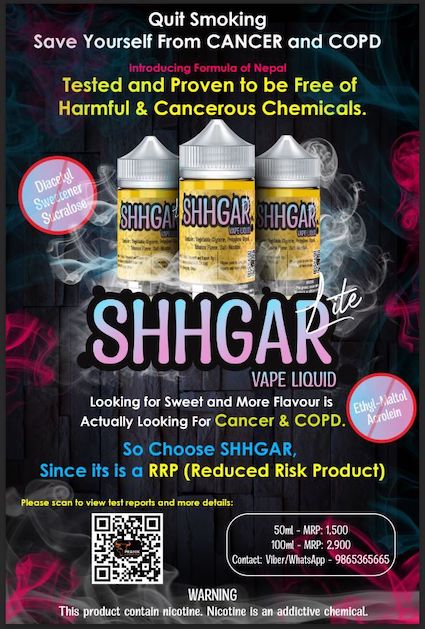
It's worth mentioning that vaping and e-cigarettes have been the subject of extensive debate and research regarding their potential health effects. The long-term health consequences of vaping are still being studied, and it is generally recommended to exercise caution and follow regulations and guidelines set by health authorities and government.
Necessity of vape liquid
It is a known fact that cigarette smoking is a leading cause of severe diseases and
premature death. It is associated with a wide range of health problems, including lung cancer, chronic
obstructive pulmonary disease (COPD), heart disease, stroke, respiratory infections, and various types of cancer
(such as throat, mouth, esophageal, pancreatic, bladder) and kidney cancers.
This is due to several harmful chemicals and heavy metals (Annex I) present in high toxic level in cigarettes
like tar, carbon monoxide, formaldehyde, hexamine, benzene, naphthalene, methanol, toluene, butane, PAHs,
ammonia, acetone, acetic acid, lead, cadmium, arsenic, and hydrogen cyanide2
Hence, reduced risk products (RRPs), displacing the conventional cigarette smoking, is an extreme necessity that
will help minimize these health hazards. Current cigarette smokers and users of harmful tobacco like
"खैनी", "गुडका", must quit or switch to RRPs. Researchers and experts define the conventional smokers and
tobacco users as the "off-ramp" users and proponents of tobacco harm reduction (THR) are focusing on the use and
benefits of RRPs for the these users3
Vape liquid as RRP
Japan Tobacco International, UK and USA are promoting vape, also known as "electronic
cigarette" or "e-cigarette" under the brand of LOGIC as a RRP44.
It was also concluded that e-cigarettes are 95% safer than combustibles (smoke cigarettes) through extracted
literature of Public Health England (BMJ 2015;351 :h4634).5
The same journal, BMJ 2015;351 :h4634 of Public Health England suggested, "Switching from smoking to vaping
avoids most of the risks of smoking and smokers should be encouraged to do so. £-cigarettes currently are
much more popular than other treatments and hence have much wider reach and potential for a major public
health impact."5
Australian Tobacco Harm Reduction Association (ATHRA) announced that vaping more likely be 98%-99% less risky
than smoking, and smoker who can't quit, will dramatically reduce the risk of dying from cancer, heart and lung
disease if switched to vaping.6